Smartcat
August 2024 – January 2026
Turning more trial users into paying customers
In the growth team of an AI translation platform, I made the product’s AI credits clear to new users. Conversion to self-service purchase rose 17%, and more people signed up with a work email.
+17%
conversion to self-service purchase
5% → 31%
sign-ups with a work email
+5.2%
conversion to subscription
Context
Smartcat is an AI translation platform that learns from every translation it does for a customer. I joined its growth team in August 2024 as the product designer. Our part of the funnel ran from sign-up to the first translated file.
The problem
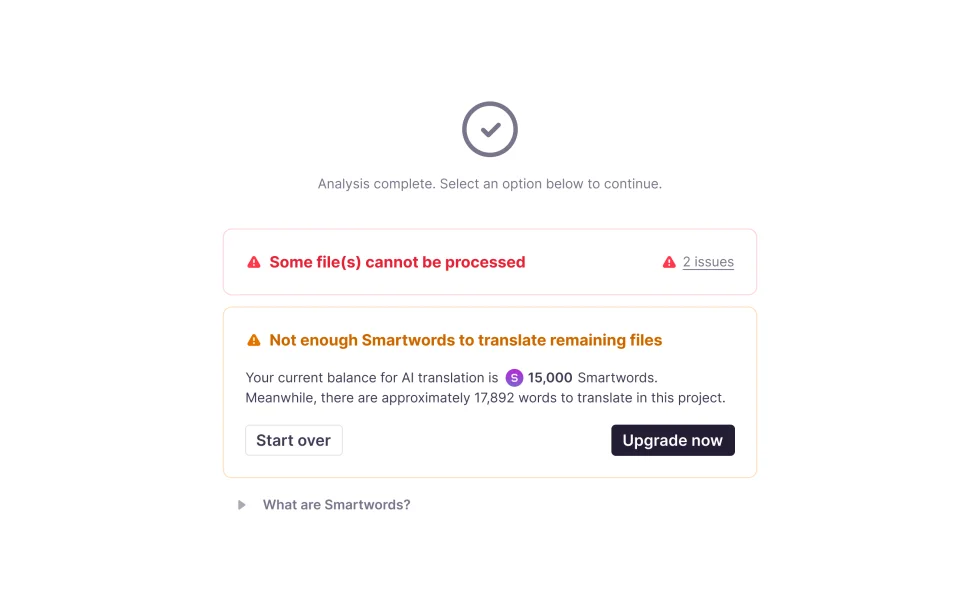
New users did not understand Smartwords, the credits that every AI action in the product spends. Onboarding never mentioned them, so when the 15,000 trial credits ran out, the product simply stopped. Support kept getting the same message, “not enough Smartwords, what does it mean?” And in sign-up, only 5% of new users gave a work email.
What I did
Explaining the AI credits up front
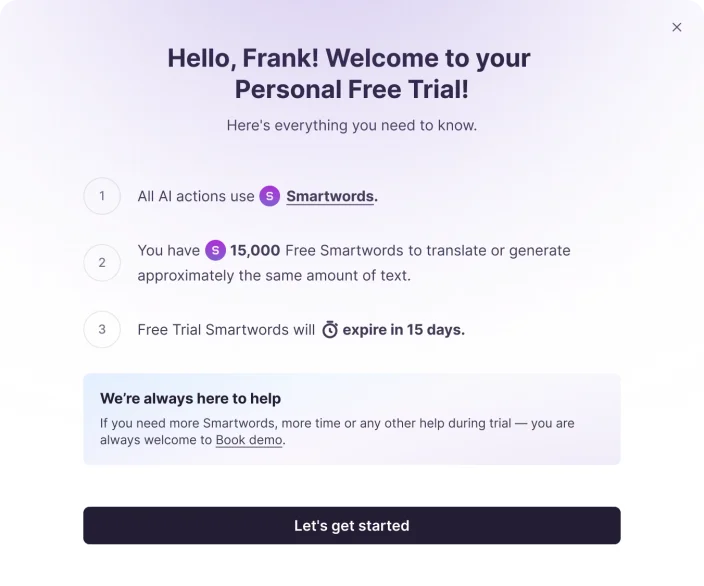
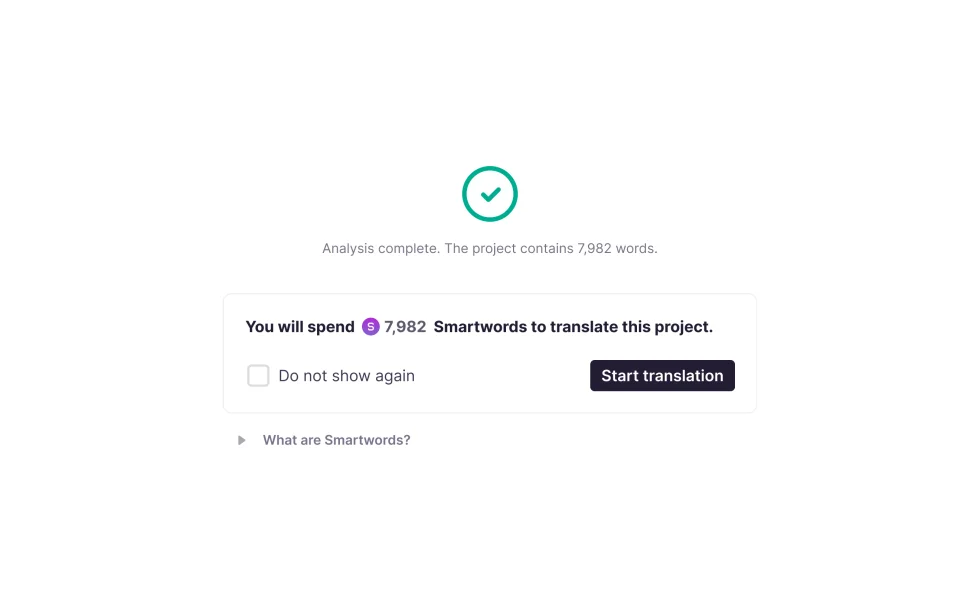
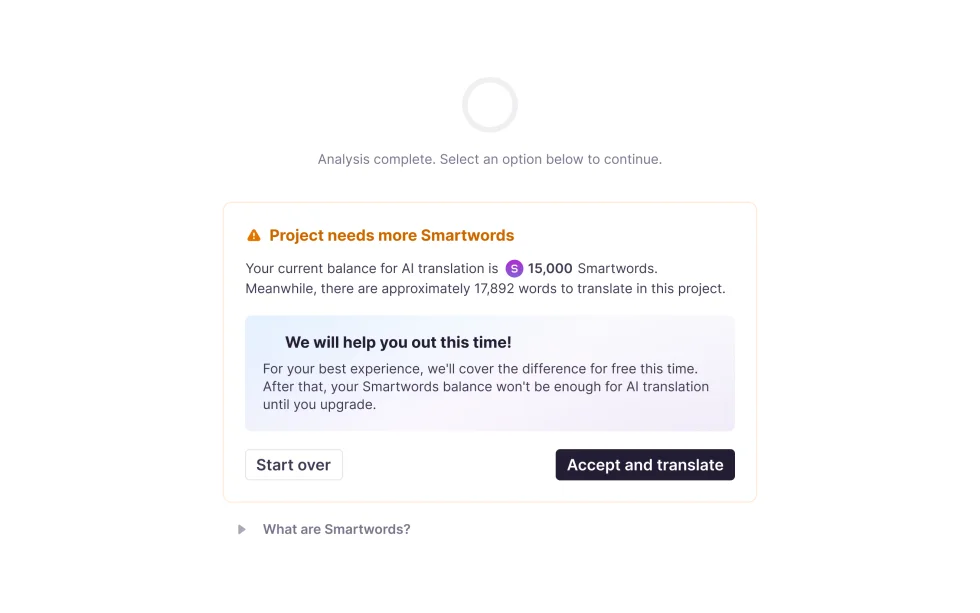
I added a welcome screen that explains the rules of the trial. Every AI action uses Smartwords, and the trial includes 15,000 of them. After a file upload, the product now shows the cost of the translation before anything is spent. Conversion to self-service purchase rose 17%, support got fewer questions, and the sales team said it saved them time.
Building sign-up around work emails
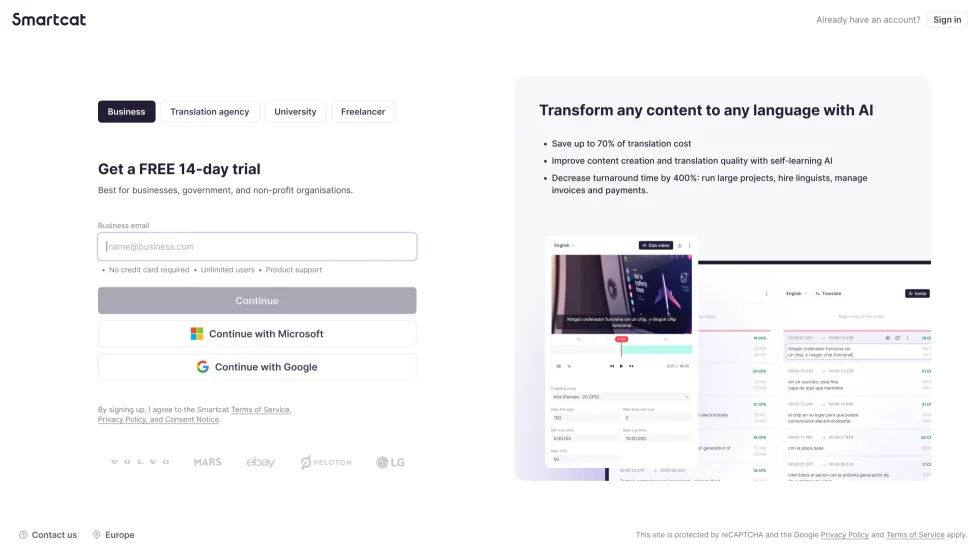
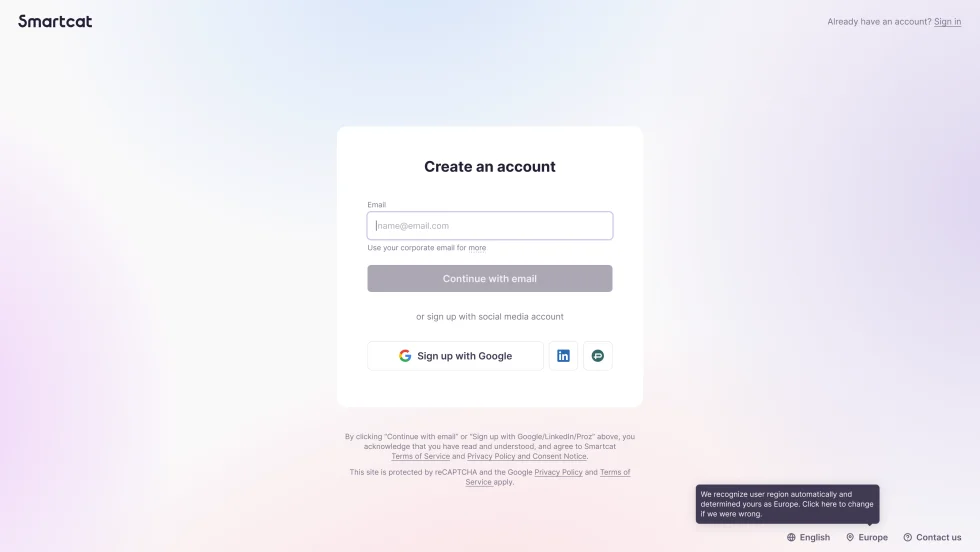
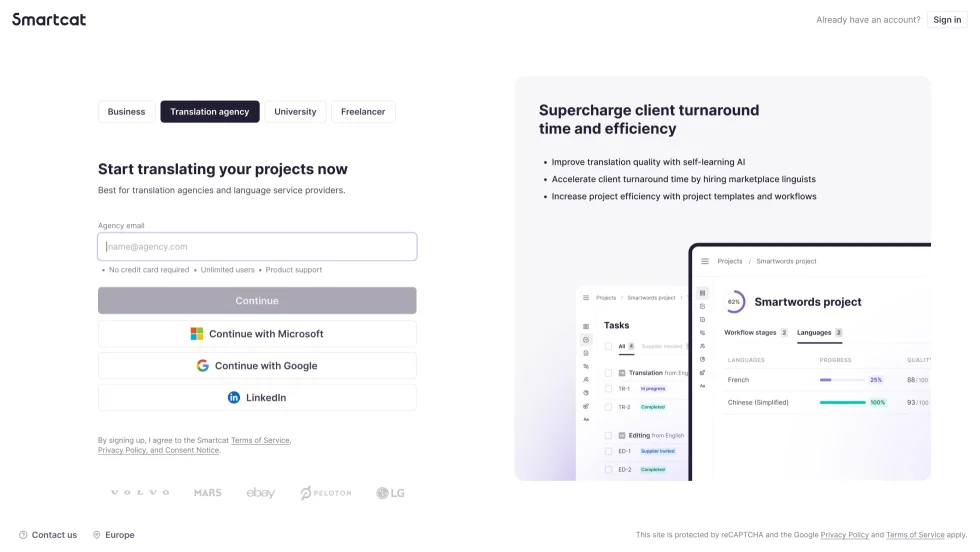
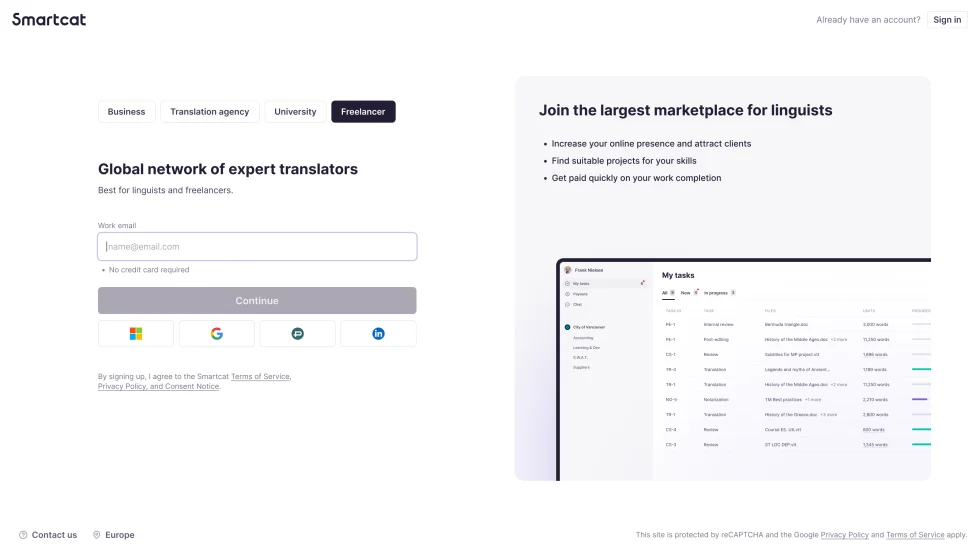
I rebuilt sign-up around work emails and blocked personal addresses. Translation agencies, universities and freelance translators each got a route of their own. Sign-ups with a work email went from 5% to 31%. Conversion to subscription rose 5.2%.
Finding out where new users struggled
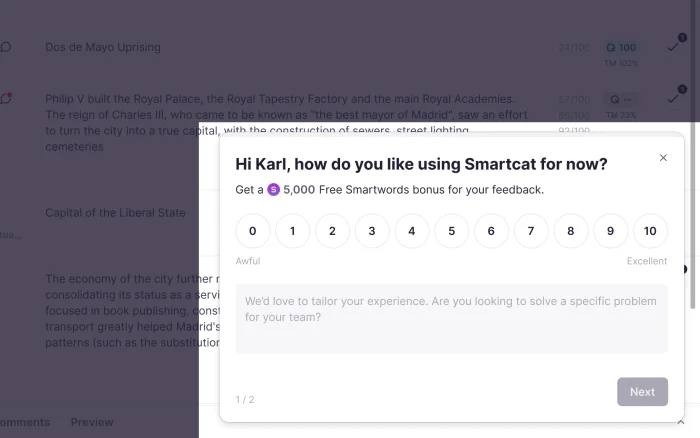
The team wrote its own hypotheses, and the growth director chose the order of tests. To learn where new users struggled, I designed a satisfaction survey inside the product, with the answers sent to our Slack. The answers showed hidden problems in onboarding and communication. For example, users wrote that they did not know how many free words they had left. This supported the Smartwords change. We also used transcripts of interviews run by our lead designer, and an AI agent that marked important points in client calls.
The design system, reviews and code
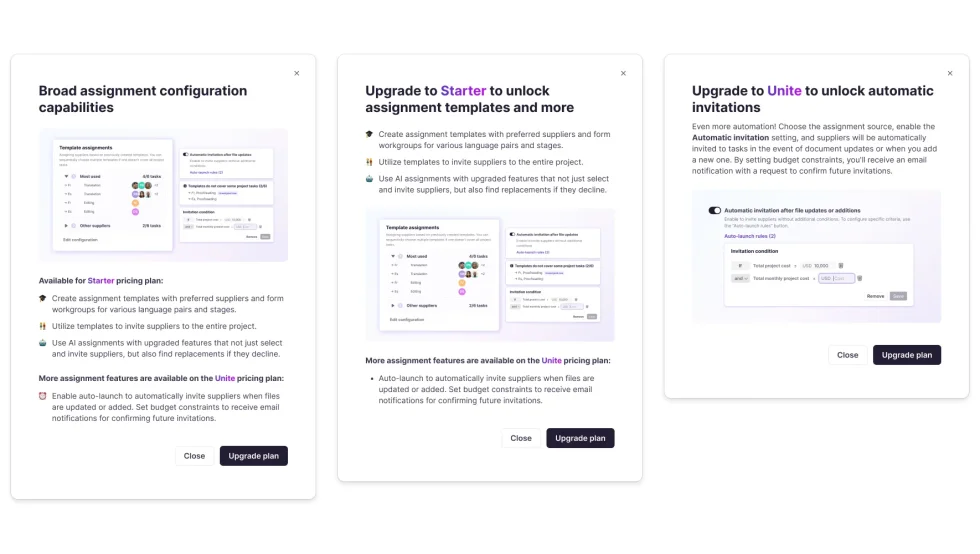
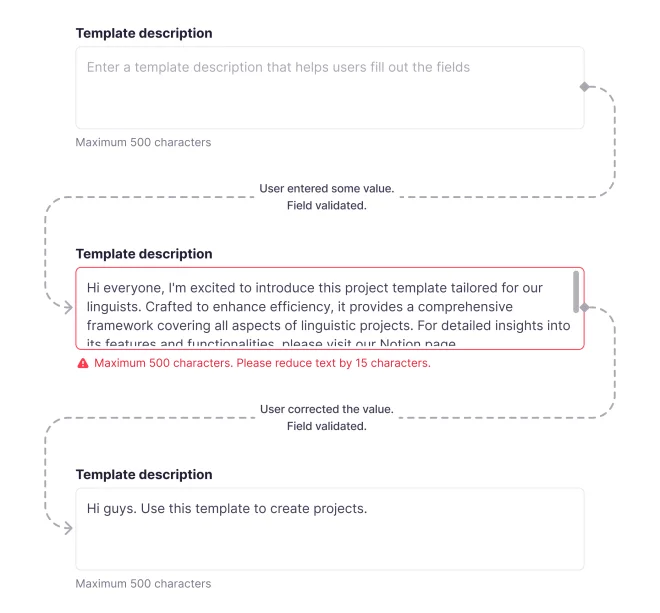
Smartcat has a design system in Figma, built from small parts up to full page templates. Engineers use the same components in Storybook, and I designed within it. I also reviewed colleagues’ designs, and a design went to engineering only with three approvals out of five designers. In my last six months, I built prototypes in code with Claude. Engineers reviewed about ten of my merge requests and merged them into production. Most of them were interface fixes in sign-up and onboarding.
First steps towards an AI agent
In my last months, Smartcat began to turn the product into an AI agent that does the translation work for the user. I worked on the growth side of this change. I designed how a new user meets the agent in onboarding and gives it the first task. Before the agent starts, it shows what the task will cost in Smartwords, as the rest of the product already did.
Results
- Conversion to self-service purchase rose 17%.
- Support got fewer questions about Smartwords, and sales spent less time explaining them.
- Sign-ups with a work email went from 5% to 31%.
- Conversion to subscription rose 5.2%.
- Survey answers showed hidden problems in onboarding and communication.
Who did what
- Me: the Smartwords onboarding, the new sign-up, the survey, the agent’s first steps for new users, design reviews, and code prototypes in my last six months.
- The team: the hypotheses, which we wrote together.
- Front-end and back-end engineers: built the new sign-up, the welcome screen and the cost estimate.
- Analyst: set up the tracking and read the test results in Mixpanel and Grafana.
- Growth director: chose which hypotheses to test, and in what order.
- Lead designer: ran the customer interviews whose transcripts we used.
What I learned
- Smartcat started to build an AI agent for customers before the team used agents in its own work. Today I would start with agents in the team’s own work, and let that experience shape the product.
- People need to see what an AI action costs before they use it. Once the trial rules were clear, more users bought on their own.