Fundraisly
December 2025 – present
Designing and testing an AI product for startup founders
I’m the only product designer in a small team. I turned customer calls into a research base, followed homepage tests to signed contracts and shipped the AI agent’s front end with Claude Code.
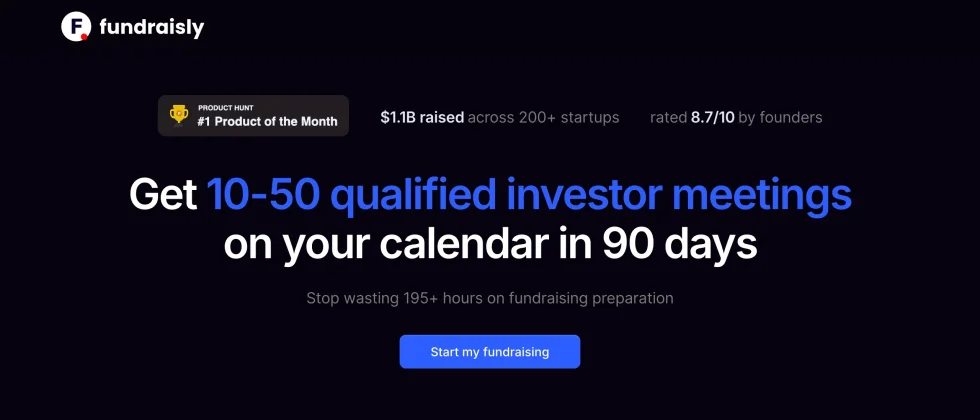
#1
Product of the Month on Product Hunt
1,349
customer calls turned into a research base
4
homepage A/B tests followed to signed contracts
16 days
to ship four releases with AI coding agents
Context
Fundraisly is an AI fundraising platform for startup founders. It matches them with investors and, through Warm intros, finds people in their network who can introduce them. Founders can also run outreach to investors on LinkedIn.
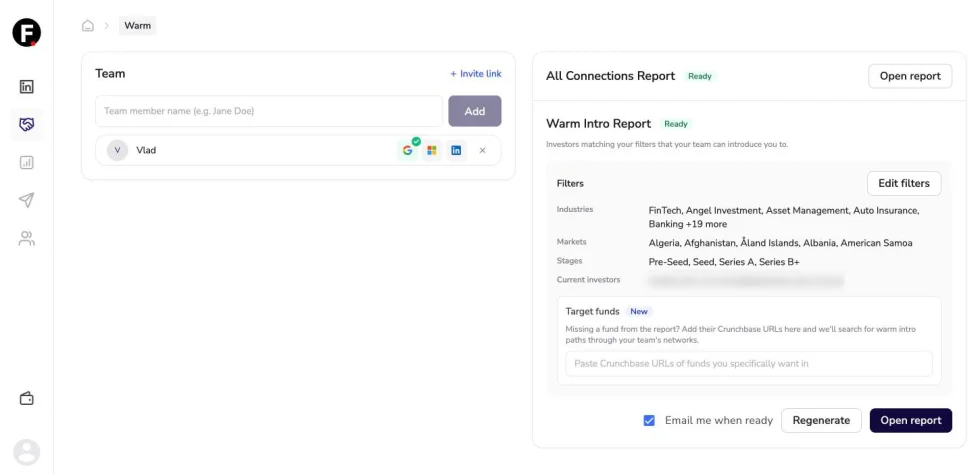
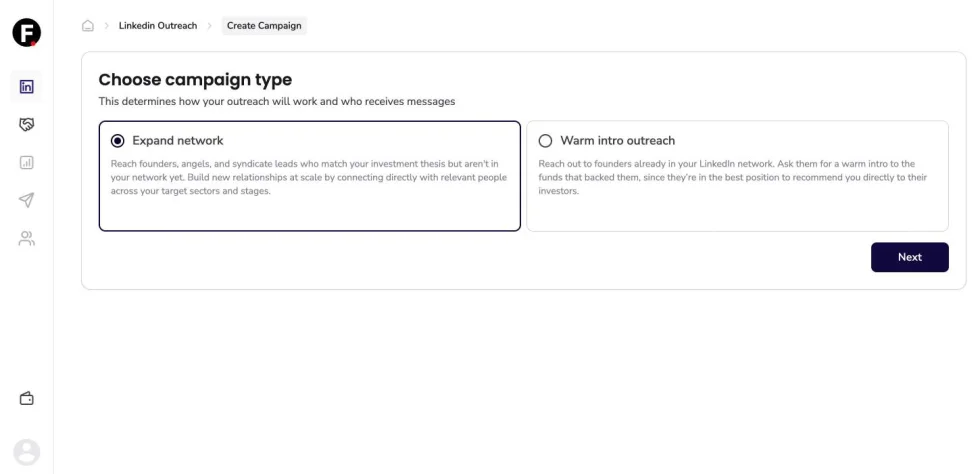
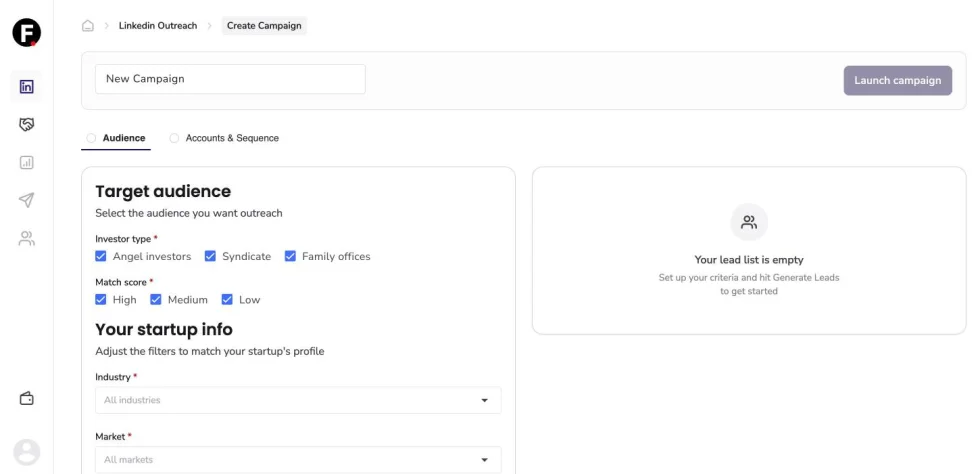
I joined in December 2025 as the only product designer in a small team. Before the launch, I designed the product’s interface, the marketing site in Framer, landing pages, the pitch deck and a brand guide. In June 2026 we launched on Product Hunt with me as one of the makers, and Fundraisly became #1 Product of the Day, Week and Month.



The problem
The sales funnel was long: the homepage, an email form, a sales call, and only then a signed contract. So a test that stops at the first click says little about sales.
The team had recorded over a thousand customer calls, but nobody went back to them.
When the team got smaller in September 2026, I also took over the front end of the AI agent product. It still needed a landing page, sign-up, billing and Warm intros.
What I did
A research base from 1,349 customer calls
I connected an AI agent to the team’s call recorder and pulled all 1,349 calls with their transcripts. I turned sales calls into a guide to how customers talk. From calls with paying clients, I built a searchable base of 1,471 complaints, requests and reasons to leave. The recorder’s AI summaries change people’s words, so I checked every quote against its transcript. Evidence from these calls made the Warm intros redesign a priority.
Homepage tests followed to signed contracts
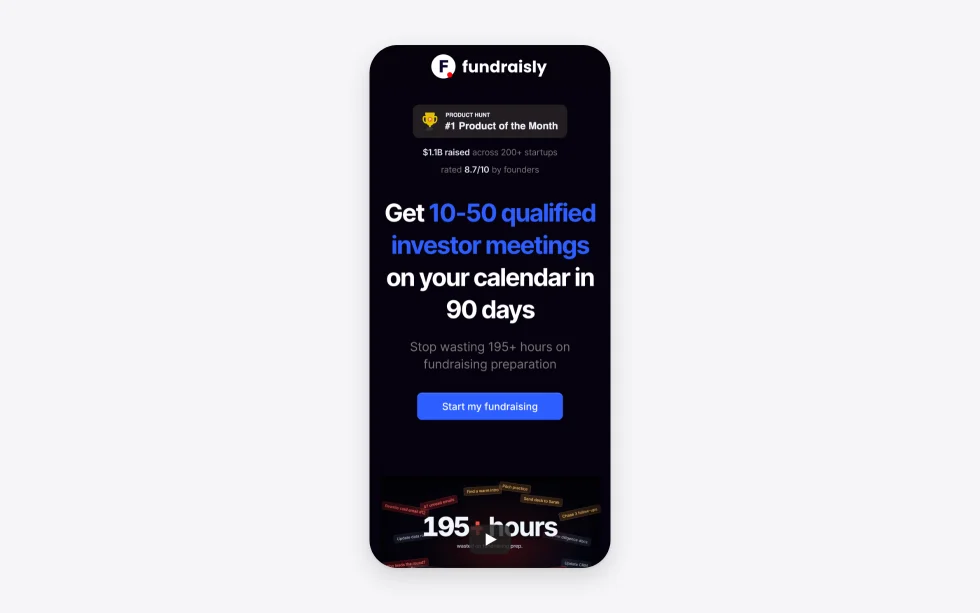
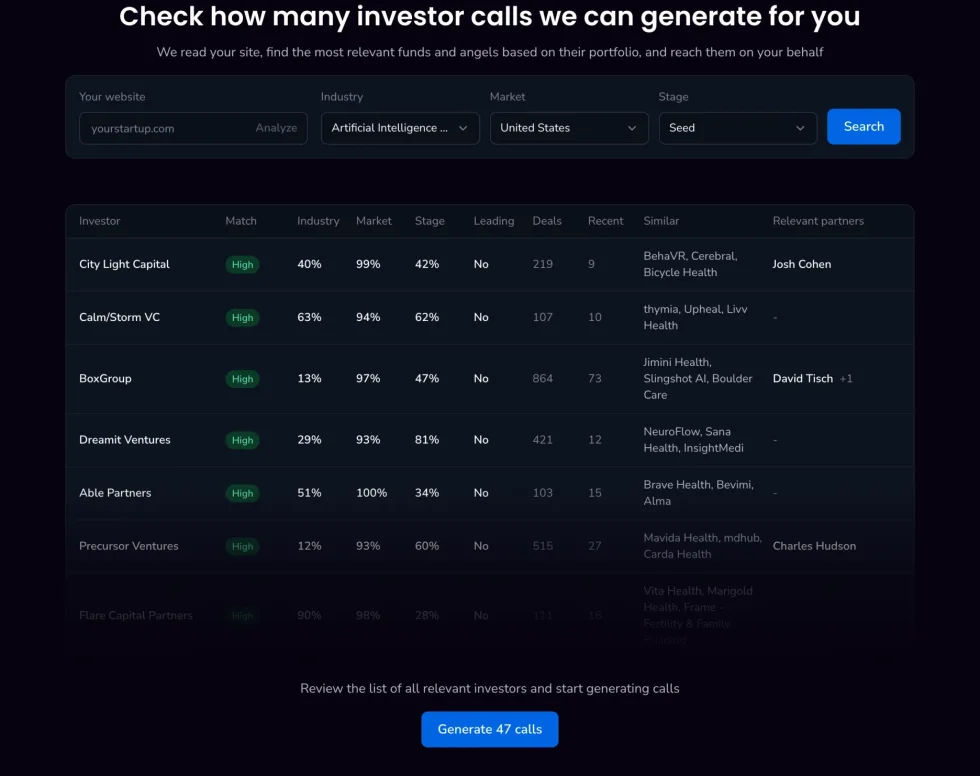
From August to October 2026 I ran four A/B tests on the homepage and followed each one up to signed contracts. In the main test, an investor calculator competed with a product video at the top of the page. Both brought the same share of visitors to the email form, but the video won at every later step.
| Step | A: video | B: calculator |
|---|---|---|
| Visitors | 1,849 | 1,866 |
| Reached the email form | 164 | 168 |
| Booked a call | 38 | 25 |
| Had the call | 19 | 10 |
| Signed a contract | 3 | 0 |
I stopped the test and kept the video. It brought 52% more booked calls and all three contracts. The sample was small (p ≈ 0.09), so I report this as a direction rather than a proven result.
Catching a fake win
In the first two weeks, a bug marked calculator visitors as video visitors. The data showed 22 emails for the video and 3 for the calculator. I fixed the bug and recovered the real numbers from timestamps. In fact, the video had 10 emails and the calculator 13. Now an automated check clicks every button in both variants and confirms the tracking before each test starts.
Shipping the AI agent’s front end in 16 days
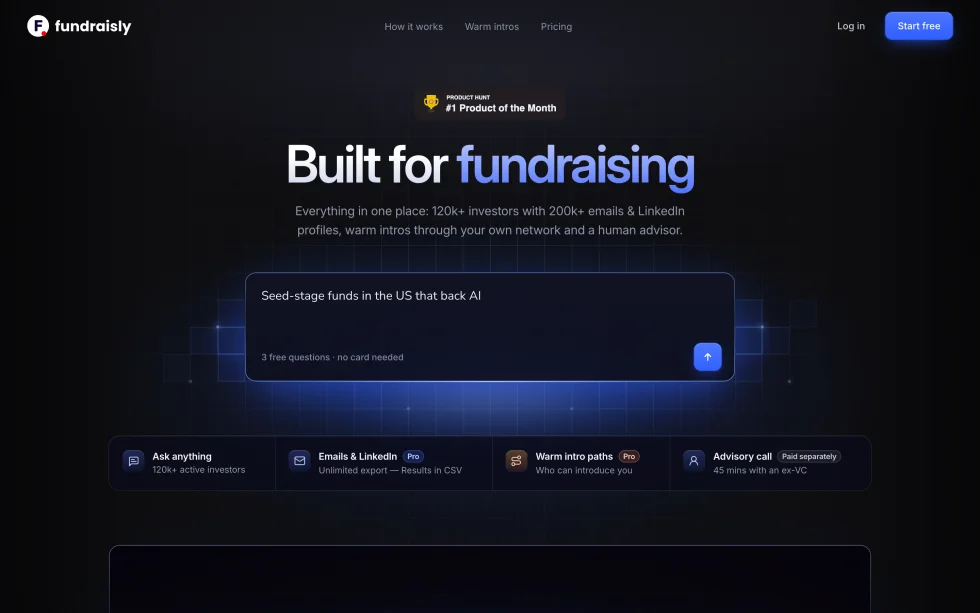
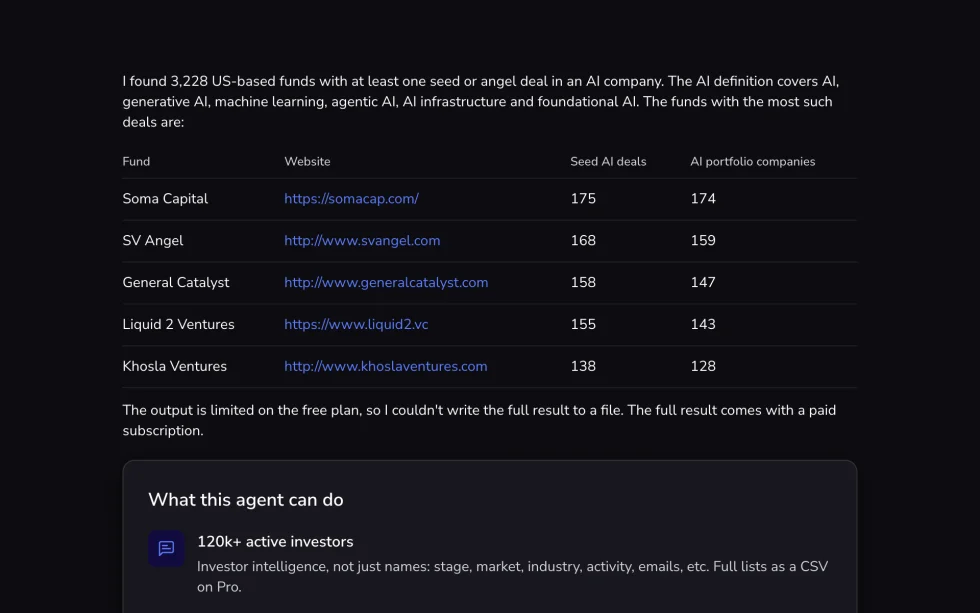
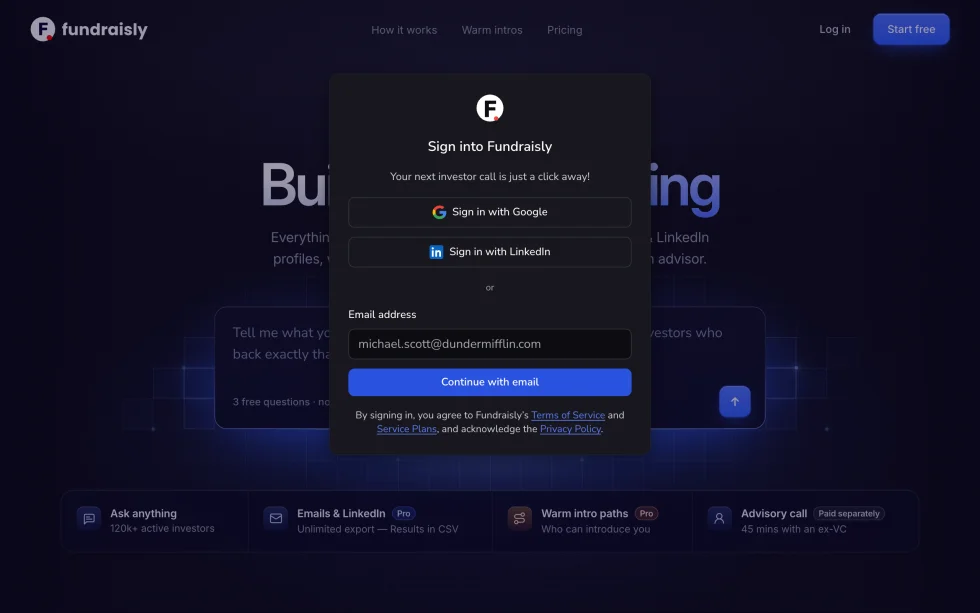
In 16 days I shipped four releases of the agent product with Claude Code: the landing page, sign-up, Pro billing and Warm intros. The agent answers three questions for free before it asks people to sign in. ChatGPT and Perplexity work the same way.
Before review
- BriefI write what to build and why
- BuildClaude Code writes the code
- Browser checkI check the change on the page
Before release
- Automated testsThey run on every change
- Code reviewBy our back-end developer
Every day, an automated test also clicks through the whole product.
Results
- The homepage kept the video, and later an AI-made demo video replaced a co-founder’s recording after its own test.
- Every homepage test now starts with an automated check of buttons and tracking.
- The agent product went live with its landing page, sign-up, Pro billing and Warm intros.
- In the first two and a half weeks, 324 people opened the agent. 75 of them asked a question, and 19 signed in.
- The landing page now speaks in customers’ own words.
Who did what
- Me: design of Warm intros and LinkedIn outreach, the agent product and the marketing site, A/B tests, research, and the agent’s front end since September 2026.
- Back-end developer: the investor matching, the API and the data, and reviews of my code changes.
- Founders: the CEO set the product priorities and ran the sales calls. A co-founder recorded the first demo video.
- Customer success: the calls with paying clients.
What I learned
- I follow every test up to the signed contract. The calculator matched the video at the first step and lost at every step after it.
- Three in four visitors left the agent without asking anything, and most of them came from Meta ads. Next, I would test a first screen made for visitors from ads.